

2026 vs 2025 Ford Transit
For business owners and fleet operators in Snellville, Atlanta, Stone Mountain, and Lawrenceville, the Ford Transit remains a trusted commercial vehicle for cargo, passenger, and fleet applications. If you’re comparing the 2026 vs 2025 Ford Transit, understanding what’s actually different can help guide your next acquisition.
This detailed guide from Five Star Ford Stone Mountain focuses on the latest facts for both model years, breaking down technology, safety, powertrain, E-Transit (electric), real-world functionality, and pricing—so you can make the best commercial investment for your needs.
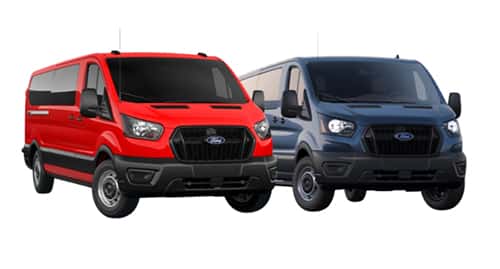
What’s New for the 2026 Ford Transit
The 2026 Ford Transit continues the same proven platform as the 2025 model, but introduces select technology, safety, and connectivity updates rather than a redesign. Most mechanical elements—including engines, dimensions, and configurations—carry over unchanged.
Where 2026 does improve is in its standardized safety tech and expanded digital features:

Key Updates for 2026 (Compared to 2025)
- Co-Pilot360 becomes more widely standard across the lineup, expanding access to core driver-assist features like automatic emergency braking and lane-keeping assist
- Expanded availability of Co-Pilot360 Assist 2.0 on select trims, adding more advanced features such as adaptive cruise control and lane-centering capability
- Enhanced connectivity and infotainment availability, including larger available SYNC 4 touchscreen options and improved voice/connected functionality
- Continued rollout of fleet-focused Ford Pro software and telematics tools for commercial users
What Stays the Same as 2025
The following carries over without major changes:
- 3.5L V6 and EcoBoost engine options
- Cargo, Passenger, and Cutaway configurations
- E-Transit platform and estimated range (~159 miles)
- Overall vehicle design and dimensions
Starting Price Comparison
The Ford Transit maintains a very similar pricing structure across both model years, with no major repositioning between 2025 and 2026. In both cases, final pricing is primarily driven by configuration rather than model-year differences.
The 2025 Ford Transit typically ranges from $43,700 – $67,700 MSRP, while the 2026 Ford Transit starts around $50,000 – $60,000+ MSRP, depending on setup.
Pricing is influenced most by:
- Body style (Cargo, Passenger, Cutaway)
- Roof height and wheelbase selection
- Drivetrain (RWD vs available AWD)
- Engine and package configuration
- Commercial upfits and fleet equipment
Rather than meaningful year-over-year changes, the difference in pricing is mainly due to configuration mix and market availability. Call our team at 678-405-1967 to discuss accurate pricing, availability and potential deals for the Ford Transit.
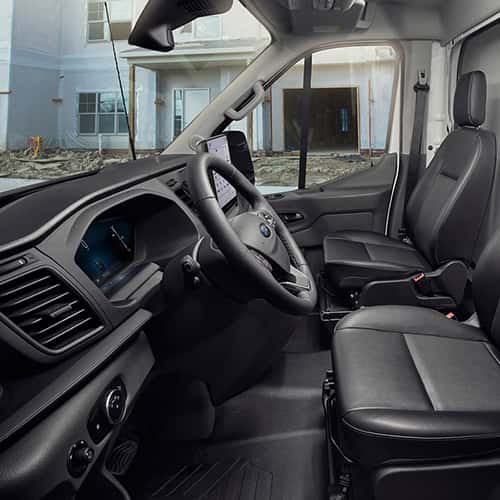
2026 vs 2025 Ford Transit – Which Should You Choose?
The 2025 and 2026 Ford Transit are part of the same generation, with similar capability and no major redesign between model years. The main differences come down to feature availability and technology updates.
2025 Ford Transit
- Strong overall value and proven reliability
- Often more available in current dealership inventory
- Same core engines and configurations as 2026
- Ideal for budget-focused or immediate business needs
2026 Ford Transit
- Same platform and capability as 2025
- Incremental tech and connectivity updates
- Expanded availability of driver-assist features on select trims
- Slightly more modern feature focus vs. 2025
The 2025 and 2026 Ford Transit are mechanically and structurally the same, with similar performance and utility. Your choice comes down to pricing, features, and availability. Explore available Transit models or schedule a test drive at Five Star Ford Stone Mountain to find the right fit for your business.
0 comment(s) so far on 2026 vs 2025 Ford Transit